

This post may contain affiliate links. If you buy through them, I may earn a small commission at no extra cost to you.
Choosing the right power bank in India is not just about picking the highest mAh number or the highest charging wattage. Capacity, charging speed, USB-C support, charging protocols, portability and safety features all affect whether a power bank is actually suitable for your phone and daily use.
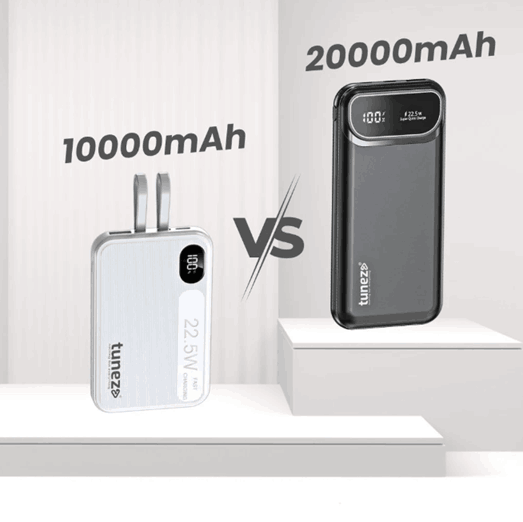
A 10,000mAh model can make more sense for everyday commuting, while a 20,000mAh model may be better for longer trips or heavier use. Similarly, a 22.5W power bank will not necessarily charge every phone at 22.5W because the phone, cable and supported charging protocol also matter.
This guide explains how to choose a power bank based on your actual usage instead of simply choosing the biggest capacity or highest wattage.
What is the Best Power Bank in India?
There is no single power bank that is best for every user. The right choice depends mainly on how much backup you need, how often you carry it, which devices you charge and what charging standard your phone supports.
For everyday smartphone backup, a 10,000mAh model is often easier to carry. If you need more reserve power for travel or multiple devices, 20,000mAh can be more appropriate.
Instead of choosing by capacity alone, check the power bank’s output, USB-C capability, charging protocols, port configuration, weight and warranty.
Quick Decision: Which Power Bank Should You Choose?
Choose 10,000mAh if: portability is important and you mainly need backup for a smartphone during commuting, office use or short trips.
Choose 20,000mAh if: you need more reserve power, travel frequently or regularly charge more than one device.
Choose USB-C PD if: your phone or other device supports USB-C Power Delivery and you want a compatible fast-charging option.
Choose a multi-port model if: you regularly charge two or more devices.
Choose a lighter model if: you carry the power bank every day and do not need maximum capacity.
For specific recommendations, see our [best 10,000mAh power banks under ₹1,200] and [best 20,000mAh power banks under ₹2,000] guides.
✔ Best Budget Option: Xiaomi Power Bank 4i 10000mAh 22.5W Fast Charge (Fast Charging, Compact)
A compact and budget-friendly 10000mAh power bank ideal for daily use. It supports fast charging with USB-C input/output and is perfect for carrying in your pocket or bag.
✔ Best for Fast Charging: boAt 20000mAh Power Bank (Fast Charging, Heavy Use)
A powerful 20000mAh power bank designed for heavy users and fast charging needs. It supports multiple device charging and is ideal for travel, long days, and high-performance usage.
How to Choose the Best Power Bank in India for Daily Use
1. How Many Times Can a Power Bank Charge a Phone?
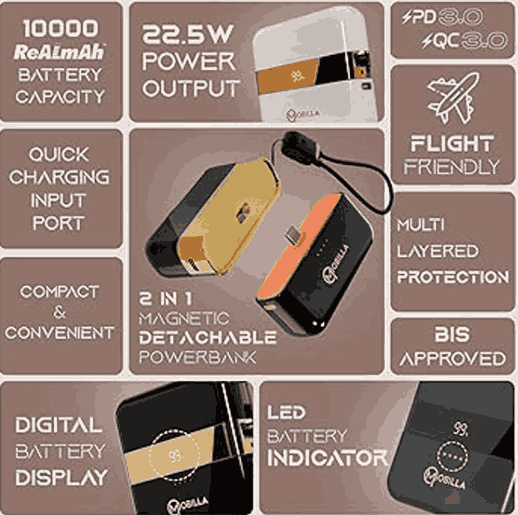
The number of charges cannot be determined from the mAh rating alone. Actual usable energy is affected by the phone’s battery size, conversion losses, charging conditions and the power bank’s design.
For example, Xiaomi publishes different charging results for different phones with its 10,000mAh Power Bank 4i, demonstrating that the same power bank does not provide the same number of charges to every phone.
Therefore, treat claims such as “3–5 charges” as estimates rather than guarantees.
2. Check Fast Charging Support
Fast charging depends on compatibility between the power bank, phone, cable and charging protocol. Look for standards such as USB Power Delivery (PD) or Quick Charge (QC) when they are supported by your device.
A higher wattage rating does not automatically mean your phone will charge at that wattage. The phone determines how much power it can accept, while protocol compatibility also affects charging behaviour.
3. Output Power Matters
A good power bank should have at least:
- 18W output for normal use
- 22.5W or higher for fast charging
4. USB-C vs USB-A: Which Should You Choose?
USB-C is increasingly important because many current smartphones and other devices use USB-C for charging. It can also support modern charging standards such as USB Power Delivery.
USB-A is still useful for older cables and devices, and its charging capability depends on the specific port and supported standard.
Therefore, don’t assume that every USB-C port is automatically faster than every USB-A port. Check the actual output specification and charging protocols.
For a new power bank, having at least one USB-C input/output port is generally useful for long-term compatibility.
5. Check Safety Features and Certification
Look for clearly documented protection features such as over-current, over-voltage, short-circuit and temperature protection.
Also check the manufacturer’s warranty, product documentation and applicable Indian certification or compliance information.
Do not assume that a product is safe simply because it comes from a familiar brand.
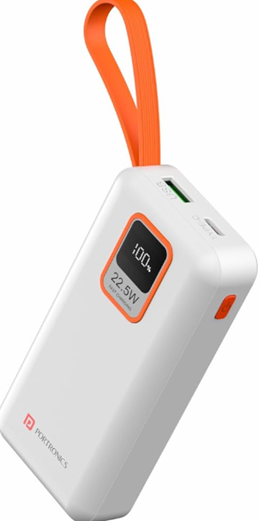
A power bank should be easy to carry and durable.
Slim designs fit pockets better
Metal or strong plastic bodies last longer
LED indicators help monitor battery level
For compact options, check our list of
👉best power banks under ₹1500
How Much Output Power Do You Need?
There is no single wattage that is right for everyone.
For basic smartphone backup, lower-output models may be sufficient. If your phone supports faster charging, look for a power bank whose output and charging protocols are compatible with the phone.
If you charge tablets, gaming devices or other higher-power equipment, check the device’s charging requirement before choosing the power bank.
The key point is to match the power bank’s actual supported output and protocols to the device rather than choosing the highest wattage number.
A power bank contains a high-energy lithium battery, so safety features matter. Depending on the model, manufacturers may provide protections against overcharging, over-current, over-voltage, short circuits and abnormal temperature conditions.
Check the manufacturer’s specifications for the exact protections provided rather than assuming every power bank includes the same safety system.
Look for power banks with:
Over-charge protection
Short circuit protection
Temperature control
Auto shut-off system
These protect both your phone and the power bank.
You can read official battery safety rules on theBIS India website.
🔥 COMMON MISTAKES TO AVOID
- Buying only based on price
- Ignoring fast charging support
- Choosing a low capacity for heavy use
- Not checking airline rules
👉 These mistakes waste money and reduce performance.
Match the Power Bank to Your Usage
For daily commuting
A 10,000mAh power bank is usually easier to carry and can be a sensible choice when you mainly need smartphone backup during the day.
For travel
A 20,000mAh model can provide more reserve power, but it will generally be larger and heavier. Check the manufacturer’s stated Wh rating and your airline’s current requirements before flying.
For multiple devices
Look for multiple outputs and check how much power the power bank can provide when more than one port is being used.
For fast-charging smartphones
Check the phone’s supported charging standard first, then choose a power bank with compatible output and protocols.
A compact 20,000mAh model can make sense when you want more reserve power without choosing a very bulky design. Check the exact output and port configuration before buying.
👉 Don’t want to read everything? Decide quickly based on the information below.
| Your priority | Recommended capacity | What to check |
|---|---|---|
| Everyday smartphone backup | 10,000mAh | Weight, USB-C, output |
| Longer travel | 20,000mAh | Capacity, weight, Wh rating |
| Fast-charging phone | 10,000mAh or 20,000mAh | PD/QC/protocol compatibility |
| Multiple devices | 20,000mAh often makes more sense | Number of ports and combined output |
| Maximum portability | 5,000–10,000mAh | Weight and dimensions |
| Tablet or higher-power device | Usually 20,000mAh | Required wattage and protocol |
Want specific models?
You can explore our picks for
👉 best 10000mAh power banks under ₹1200
and
👉 best 20000mAh power banks under ₹2000
Fast Charging Explained
Fast charging is not determined by wattage alone. The power bank, charging cable and connected device must support compatible charging capabilities.
For example, Xiaomi’s Power Bank 4i supports 22.5W charging and lists Power Delivery and Quick Charge 3.0 support. Xiaomi also specifies 22.5W Type-C input and output.
Before buying, check your phone manufacturer’s charging requirements and choose a power bank that supports a compatible standard.
Build Quality & Portability
mAh vs Wh: What Do They Mean?
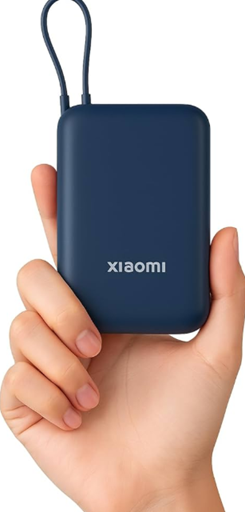
mAh describes the battery’s electrical charge capacity, while Wh (watt-hours) expresses stored energy by taking voltage into account.
For power banks, mAh is the number most shoppers see on the box, but Wh can be useful when comparing energy capacity and when checking travel requirements.
For example, Xiaomi lists its 10,000mAh Power Bank 4i as having a 37Wh battery capacity.
This is also why you should not expect a 10,000mAh power bank to deliver 10,000mAh directly to your phone’s battery. Energy is lost during voltage conversion and charging.
How to Choose Between 10,000mAh and 20,000mAh
Start with three questions:
1. What is your phone battery capacity?
Check the battery capacity in your phone’s specifications.
2. How often do you need backup?
Occasional emergency charging usually does not justify carrying a large power bank.
3. How much extra weight are you willing to carry?
If portability is important, 10,000mAh is usually the more convenient starting point. If backup capacity matters more than size, consider 20,000mAh.
The goal is not to buy the biggest power bank. It is to buy enough capacity for your actual usage without carrying unnecessary weight.
If you need compact options, check our guide on the best 10000mAh power banks under ₹1200.
If you need longer backup, see our list of the best 20000mAh power banks under ₹2000.
FINAL VERDICT
The best power bank is the one that matches your actual charging needs.
Choose 10,000mAh when portability and everyday smartphone backup are your priorities. Choose 20,000mAh when you need more reserve power for travel or heavier use.
Before buying, check five things: capacity, output power, charging protocols, port configuration and safety features. Also check the current price, warranty and exact model because specifications and availability can change.
If you want to compare specific products, use our dedicated buying guides for [10,000mAh power banks under ₹1,200] and [20,000mAh power banks under ₹2,000].
FAQs
Q1. Which power bank is best in India?
The best power bank depends on your use case. For daily portability, a 10,000mAh model can be a sensible choice. For longer travel or heavier use, a 20,000mAh model may be more suitable. If fast charging is important, check compatibility between your phone and the power bank’s charging protocols rather than choosing only by wattage.
Q2. Can I carry a 20,000mAh power bank on a flight?
Airline rules are generally expressed in watt-hours (Wh), and individual airlines can impose additional requirements. A 20,000mAh label alone is therefore not enough to determine whether a particular power bank can be carried.
Check the power bank’s stated Wh rating and your airline’s current rules before travelling.
Q3. How many times can a power bank charge a phone?
There is no fixed number. It depends on the phone’s battery capacity, power-conversion losses, charging conditions and the power bank itself. A 20,000mAh power bank will generally provide more stored energy than a 10,000mAh model, but the usable energy delivered to a phone will be lower than the printed mAh figure.
Q4. Is a fast-charging power bank worth it?
Yes, it saves time and improves overall convenience.
Q5. Which is better, 10,000mAh or 20,000mAh?
10,000mAh is better for portability, especially if you mainly need smartphone backup during commuting, office use, or short trips.
20,000mAh is better when backup capacity matters more, such as longer travel or charging several devices.
The trade-off is simple: more capacity generally means more size and weight.